
 Beck’s Toolbox
 Knives
 DIY Build Kits
 Digital Downloads
 Machine Accessories
 Fabricating Materials
CNC Plasma Cutting
How the Floating Z-Axis Sets Torch Height on a CNC Plasma Table
Sep
How the Floating Z-Axis Sets Torch Height on a CNC Plasma Table
Before a CNC plasma cutter can make a good cut, it needs to know exactly where the surface of the material is.
That sounds simple until you consider that sheet metal is rarely perfectly flat.
Material can be:
- Warped
- Bowed
- Sitting unevenly on the slats
- Distorted from previous cuts
- Different thicknesses from one job to the next
The machine cannot simply assume that Z zero is always in the same place.
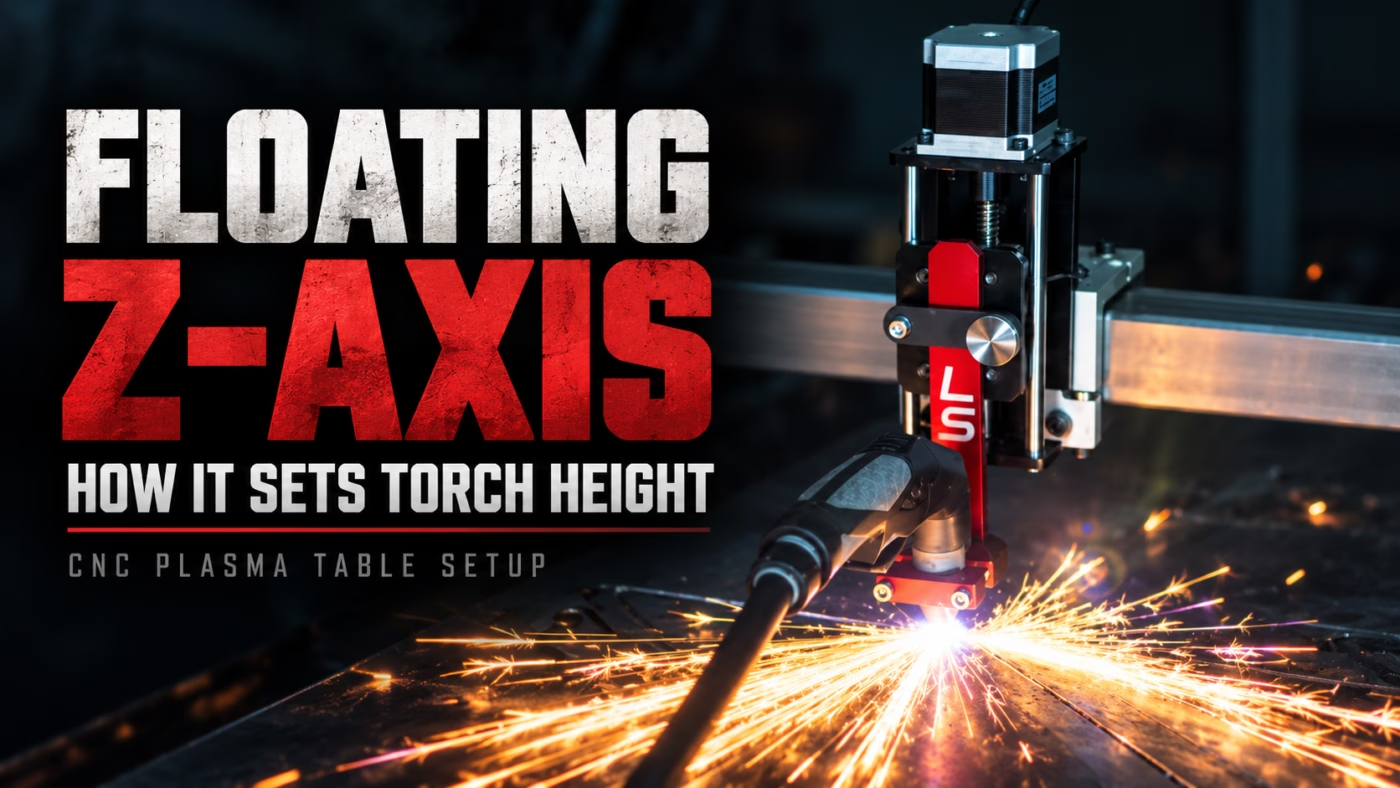
On Langmuir Systems CrossFire machines, the floating Z-axis provides a simple mechanical way to locate the actual surface of the material before the torch fires.
Understanding how it works also makes several common plasma-cutting problems much easier to diagnose.
What Is a Floating Z-Axis?
The torch rides on a portion of the Z-axis that can move independently a short distance.
On the CrossFire system, there is approximately 0.200 inch of floating travel.
During normal operation, gravity and the weight of the torch keep this floating assembly sitting at the bottom of its travel.
A limit switch detects when the floating portion of the Z-axis moves upward.
That switch is what allows the machine to determine when the torch has physically contacted the material.
How Initial Height Sensing Works
At the beginning of a cut, the machine needs to establish the surface of the material before setting the programmed pierce height.
The sequence works like this:
- The Z-axis begins moving downward.
- The torch nozzle contacts the workpiece.
- The main Z-axis continues moving downward.
- Because the torch cannot move farther down, the floating torch assembly begins sliding upward on its rails.
- After approximately 0.200 inch of floating movement, the limit switch is triggered.
- The machine now has a known mechanical reference for the material surface.
- The Z-axis backs up the floating distance.
- It then moves the additional programmed distance required for the pierce height.
- The torch fires.
This allows the machine to establish torch height based on the actual material surface, rather than assuming that every sheet is perfectly flat.
Why the Floating Distance Must Be Accounted For
When the switch activates, the torch has already contacted the material and the floating assembly has moved upward.
That means the switch location itself is not the material surface.
The control system needs to compensate for the amount of floating travel that occurred before the switch was triggered.
If the floating travel is approximately 0.200 inch, the machine must first account for that movement before applying the programmed pierce-height offset.
This distinction is important when troubleshooting torch-height problems.
The machine is not simply:
Touch material → move up to pierce height.
It is effectively:
Touch material → float upward → trigger switch → compensate for the float → establish pierce height.
Why Free Z-Axis Movement Matters
For this system to work correctly, the floating assembly has to move freely.
Anything that prevents it from sitting naturally at the bottom of its travel can change the reference the machine is using.
Possible problems include:
- Binding bearings
- Dirt or debris on the Z-axis
- Incorrect bearing adjustment
- A torch lead pulling upward
- Mechanical interference
- A damaged or misaligned slide
- A sticking limit switch
The floating Z-axis should move smoothly and return completely to its normal position under gravity.
Torch Lead Tension Can Create a False Height Reference
One of the easiest problems to overlook is the torch lead.
If the lead does not have enough slack, it can begin pulling upward on the torch as the gantry travels across the table.
The floating Z-axis is not held down by a heavy spring. It relies primarily on gravity and the weight of the torch.
That means a tight torch lead can partially lift the floating assembly.
It may even lift it far enough to trigger the limit switch without the torch ever touching the material.
This is why proper torch-lead routing is far more important than simple cable management.
I covered this problem in detail in Why Torch Lead Routing Matters on a CNC Plasma Table. Why Torch Lead Routing Matters on a CNC Plasma Table
Even Partial Lift Can Cause Poor Cuts
The lead does not have to trigger the switch to cause a problem.
Suppose cable tension lifts the floating Z-axis by only a small amount.
The machine may still run normally, but the torch is now physically higher than the Z-axis control expects it to be.
That can affect:
- Pierce height
- Cut height
- Arc voltage
- Kerf
- Bevel
- Dross
- Hole quality
- Consumable life
This can produce a frustrating problem where one side of the table cuts well while the opposite side does not.
The cutting program has not changed.
The material has not changed.
The only difference is how much tension the torch lead is applying to the floating Z-axis.
Initial Height Sensing and THC Are Different Systems
Initial height sensing and torch height control are related, but they perform different jobs.
Initial Height Sensing
Initial height sensing establishes where the material surface is before the cut begins.
The floating Z-axis and limit switch are part of this process.
Torch Height Control
Torch height control, usually called THC, operates after the arc is established.
THC monitors arc voltage and moves the Z-axis during the cut to maintain the desired torch-to-work distance.
One establishes the starting point.
The other maintains height while cutting.
Problems with either system can produce similar-looking symptoms, which is why understanding the difference is useful when troubleshooting.
A Floating Z Problem Can Look Like a THC Problem
Imagine the torch lead is pulling the floating assembly upward.
The actual torch position is now different from the position the machine expects.
Once cutting begins, THC sees the arc voltage associated with that incorrect torch height and begins trying to compensate.
The Z-axis may move downward.
Then the gantry travels to another part of the table where the torch lead suddenly has more slack.
The upward cable force disappears.
The floating assembly drops back down under the weight of the torch.
But the THC has already moved the Z-axis downward trying to correct the previous condition.
The torch can suddenly end up much closer to the material than intended—and in an extreme case it can contact the workpiece.
What appears to be bad THC behavior may actually begin with a mechanical problem in the floating Z-axis.
Torch Squareness Still Matters
Correct height does not help much if the torch is leaning.
The Z-axis must also be properly trammed so the torch is perpendicular to the cutting surface.
An out-of-square torch can contribute to:
- Uneven bevel
- Poor hole quality
- Different edge angles on opposite sides of a part
- Dimensional inconsistency
I covered the CrossFire Pro Z-axis adjustments in CNC Plasma Torch Squareness Matters for Cut Quality. CNC Plasma Torch Squareness Matters for Cut Quality
Torch height and torch squareness solve two different problems.
You need both correct.
What Happens During a Torch Collision?
The floating Z-axis is designed primarily for sensing material height. It is not intended to absorb a major sideways torch collision.
A tipped part, warped sheet, or loose remnant can still hit the torch as the machine moves.
That is where a breakaway mount becomes useful.
A magnetic breakaway mount allows the torch-holder assembly to separate during a significant collision instead of transferring the entire load into the torch and Z-axis.
For more on that system, see Why a Magnetic Breakaway Torch Mount Matters on a CNC Plasma Table. Why a Magnetic Breakaway Torch Mount Matters on a CNC Plasma Table
The floating Z-axis handles vertical height sensing.
The breakaway mount handles abnormal collision loads.
They serve very different purposes.
Check the Floating Z-Axis Across the Entire Table
Do not test the Z-axis only with the gantry sitting near the center of the machine.
Jog the torch to:
- Front left
- Front right
- Rear left
- Rear right
- Center of the table
Watch the floating assembly at each position.
It should remain fully seated at the bottom of its travel everywhere.
If it begins lifting as the gantry moves farther from the torch-lead support, you have found a cable-routing problem.
This simple test can save a lot of unnecessary troubleshooting.
Keep the Z-Axis Clean
Plasma tables create an extremely dirty environment.
The machine is constantly exposed to:
- Metal dust
- Slag
- Smoke
- Fine debris
- Abrasive particles
The floating Z-axis depends on smooth mechanical movement.
Periodically inspect the rails, rollers, bearings, and switch area.
The assembly should move freely without excessive looseness or binding.
If you have to force the floating section upward or downward by hand, something needs attention.
Make Sure the Torch Is Secure in the Holder
The floating mechanism can work perfectly while the torch itself still moves inside the holder.
If the torch slides vertically in the clamp, the machine’s Z-axis position no longer accurately represents the position of the torch tip.
The holder needs to prevent:
- Vertical slipping
- Rotation
- Rocking
- Tilting
A properly fitted holder distributes clamping force around the torch body instead of relying on excessive pressure at a few small points.
For more on that design difference, see Why Full-Radius Clamping Holds a CNC Plasma Torch Better. Why Full-Radius Clamping Holds a CNC Plasma Torch Better
A Simple Troubleshooting Test
If your torch height seems inconsistent, disable the plasma cutter and perform a basic mechanical inspection.
- Move the torch to the center of the table.
- Verify the floating Z-axis is fully seated.
- Lift it gently by hand.
- Confirm that it moves smoothly.
- Let go and make sure it returns completely under gravity.
- Move the gantry to all four corners.
- Repeat the test.
- Watch the torch lead for tension.
- Confirm the limit switch activates consistently.
- Check that the torch itself cannot slide inside the holder.
This can quickly separate a mechanical Z-axis problem from a software, THC, or cutting-parameter problem.
Final Thoughts
The floating Z-axis is a simple mechanism, but it plays a major role in CNC plasma cut quality.
On the CrossFire system, approximately 0.200 inch of floating movement allows the torch to contact the material and activate a limit switch.
The machine then compensates for that floating distance and establishes the programmed pierce height.
For the process to remain accurate:
- The floating Z-axis must move freely.
- The torch lead cannot pull upward on it.
- The torch must remain secure in the holder.
- The Z-axis must be properly trammed.
- The limit switch must activate consistently.
When those mechanical pieces are correct, initial height sensing becomes repeatable and predictable.
Before blaming THC or changing cut settings, make sure the machine actually knows where the material surface is.
