
 Beck’s Toolbox
 Knives
 DIY Build Kits
 Digital Downloads
 Machine Accessories
 Fabricating Materials
CNC Plasma Cutting
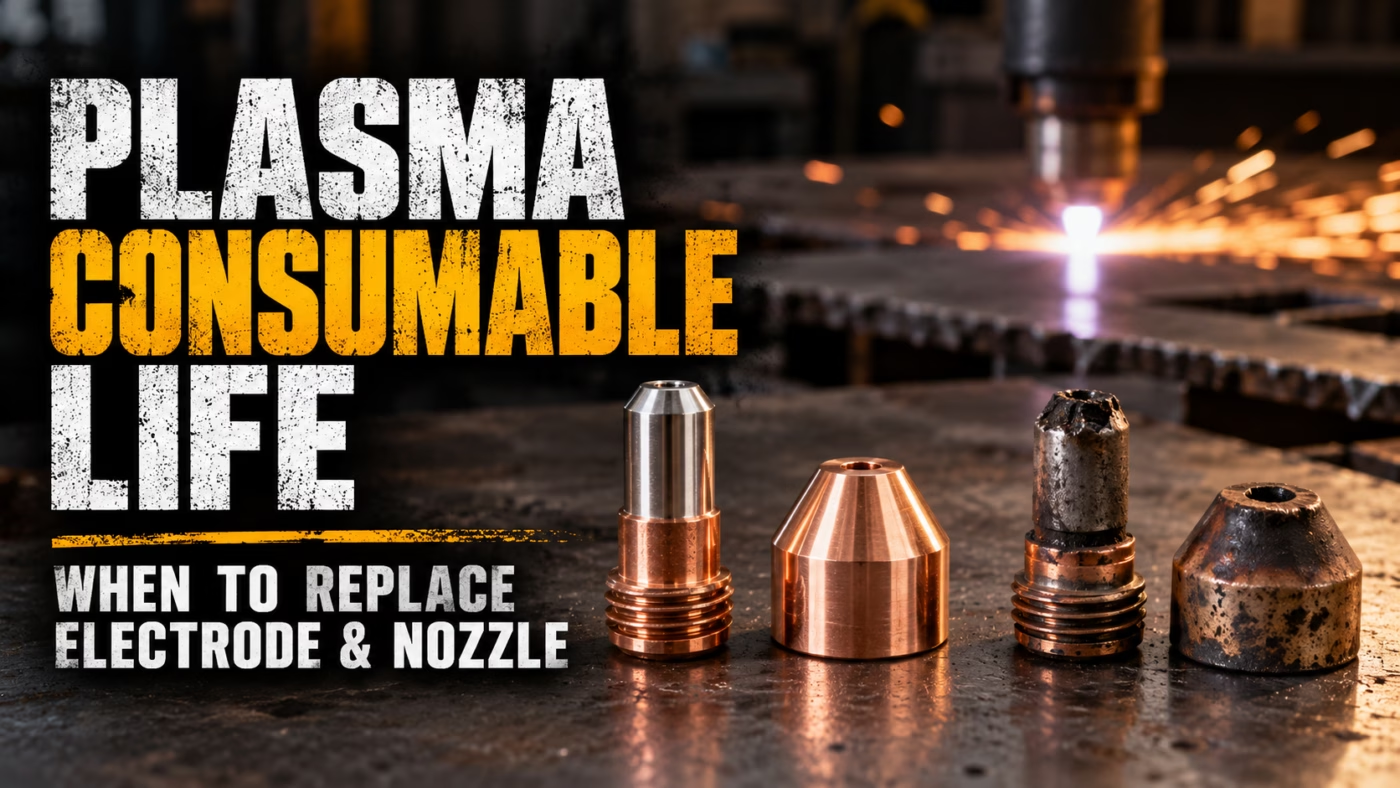
CNC Plasma Consumable Life: When to Replace Your Electrode and Nozzle
Sep
CNC Plasma Consumable Life: When to Replace Your Electrode and Nozzle
One of the easiest ways to waste money CNC plasma cutting is replacing consumables too frequently. One of the easiest ways to ruin otherwise good parts is waiting too long to replace them.
The challenge is figuring out when your consumables are actually worn out.
Just because your plasma cutter still fires doesn’t mean your electrode and nozzle are in good condition. Worn consumables can affect cut quality, kerf width, edge bevel, and even the consistency of your torch height controller.
Understanding how consumables wear and what causes premature failure can save you money and eliminate a lot of unnecessary troubleshooting.
Understanding Your Plasma Torch Consumables
Your plasma torch contains several components that work together to produce and control the plasma arc.
Three important components are:
-
Electrode: Carries electrical current and helps establish the plasma arc.
-
Nozzle: Constricts and directs the plasma arc through a precisely sized opening.
-
Swirl ring: Controls the flow of gas around the electrode and through the nozzle.
Depending on your torch, you may also have a shield and retaining cap.
Each component serves a specific purpose. Damage or excessive wear can affect the entire cutting process.
How to Tell When Your Electrode Is Worn

The electrode is one of the components that experiences significant wear during normal operation.
Most conventional air-plasma electrodes contain a small hafnium insert at the tip.
As the torch operates, the insert gradually erodes, leaving a crater.
Some cratering is normal.
However, allowing that crater to become excessively deep can damage other components and affect arc stability.
Inspect your electrode periodically and compare its condition against the manufacturer’s recommended replacement limits.
Different electrodes have different acceptable wear limits, so don’t assume one measurement applies to every plasma cutter.
Also inspect the electrode for unusual discoloration, excessive erosion, or other signs of damage.
Replacing an electrode before it completely fails can prevent additional expenses.
How to Identify a Worn Plasma Nozzle

The nozzle contains a precisely manufactured opening designed to constrict the plasma arc.
That opening is extremely important.
When the nozzle is new, the opening should be round and properly centered.
As the nozzle deteriorates, its opening can become enlarged, distorted, or damaged.
This changes how the plasma arc behaves.
Common symptoms include:
-
Increased kerf width
-
Inconsistent edge quality
-
Excessive bevel
-
Reduced dimensional accuracy
-
Difficulty maintaining consistent cuts
A damaged nozzle may still produce an arc, but that doesn’t mean it’s cutting correctly.
Inspect the nozzle opening regularly. If it’s noticeably distorted or damaged, replace it.
Don’t attempt to restore a worn nozzle by drilling or mechanically modifying its opening.
Why Your Consumables Might Be Wearing Out Too Quickly
Excessive consumable wear isn’t necessarily caused by poor-quality consumables.
Sometimes your machine’s operating conditions are responsible.
Here are several things worth investigating.
1. Incorrect Air Pressure or Insufficient Airflow
Your plasma cutter needs an adequate supply of clean, dry compressed air.
Insufficient airflow can affect arc stability and consumable cooling, potentially accelerating wear.
One particularly frustrating problem occurs when your air pressure initially looks correct but drops after cutting begins.
A compressor with insufficient airflow capacity can create exactly that situation.
Worse yet, depending on your THC, changing arc conditions can cause the controller to make unwanted height corrections.
Before blaming your consumables, verify that your compressed air system can maintain the manufacturer’s required pressure and airflow throughout the entire cut.
2. Moisture and Oil in Your Compressed Air
Water and oil contamination can contribute to premature consumable failure and inconsistent cutting.
An inexpensive water separator might remove liquid water, but it cannot remove all water vapor.
Depending on your compressor and shop conditions, a properly sized air dryer may be necessary.
Also inspect your filters and maintain your compressor regularly.
Clean compressed air is an important part of getting consistent consumable life.
3. Incorrect Pierce Height

Piercing is particularly demanding on plasma consumables.
When the torch initially penetrates the material, molten metal can be ejected upward.
That’s one reason your pierce height is normally higher than your cutting height.
If you pierce too close to the material, molten metal can blow back onto the nozzle and shield.
This can damage your consumables and interfere with subsequent cuts.
Pierce delay also matters.
If your machine begins moving before the arc completely penetrates the material, you can introduce additional cutting problems.
Use the recommended pierce height and delay for your material and consumable configuration.
4. Excessive Piercing
Here’s something worth considering when nesting parts.
Two CNC programs might cut exactly the same amount of material but have completely different consumable life.
Why?
One program might have 20 pierces, while another has 200.
Each pierce places additional demands on your electrode and nozzle.
When practical, arranging your cutting operations to reduce unnecessary pierces can help extend consumable life.
Common-line cutting and other nesting strategies may reduce the total number of pierces, although they aren’t appropriate for every application.
You still need to consider part accuracy, heat distortion, and cutting quality.
Don’t Confuse Worn Consumables With Mechanical Problems
Before replacing consumables because your parts have excessive bevel, verify that your torch is actually perpendicular to the material.
Even brand-new consumables cannot compensate for an improperly aligned Z-axis.
Read Why CNC Plasma Torch Squareness Matters for Cut Quality.
Your torch also needs to remain securely positioned.
Our article on Why Full-Radius Clamping Holds a CNC Plasma Torch Better explains the importance of properly supporting your machine torch.
Another problem to investigate is torch lead routing.
Cable tension can pull against the floating Z-axis, potentially affecting your actual cutting height.
Learn more in Why Torch Lead Routing Matters on a CNC Plasma Table.
And if your torch has experienced a collision, inspect the consumables and alignment before resuming normal operation.
Our guide on Why a Magnetic Breakaway Torch Mount Matters explains how a mechanical breakaway can help protect your equipment.
Should You Replace the Electrode and Nozzle Together?
There isn’t one universal answer.
Some manufacturers recommend replacing electrodes and nozzles together, while others provide inspection procedures and specific replacement limits.
Follow your torch manufacturer’s recommendations.
Keep in mind that installing a new nozzle alongside a severely worn electrode might not deliver the results you’re expecting.
If you experience premature wear, investigate the underlying cause rather than repeatedly purchasing replacement parts.
The Bottom Line
Your consumables don’t need to fail completely before they start affecting your cutting performance.
Regular inspection of your electrode and nozzle can help you identify developing problems before they ruin expensive material.
However, don’t automatically blame consumables for every cutting problem.
Airflow, moisture, pierce height, torch alignment, and mechanical movement can all contribute to poor performance.
Understanding how these variables work together will help you get more consistent results while avoiding unnecessary consumable expenses.
For more practical CNC plasma cutting information, visit the Beck Tools Guides.
