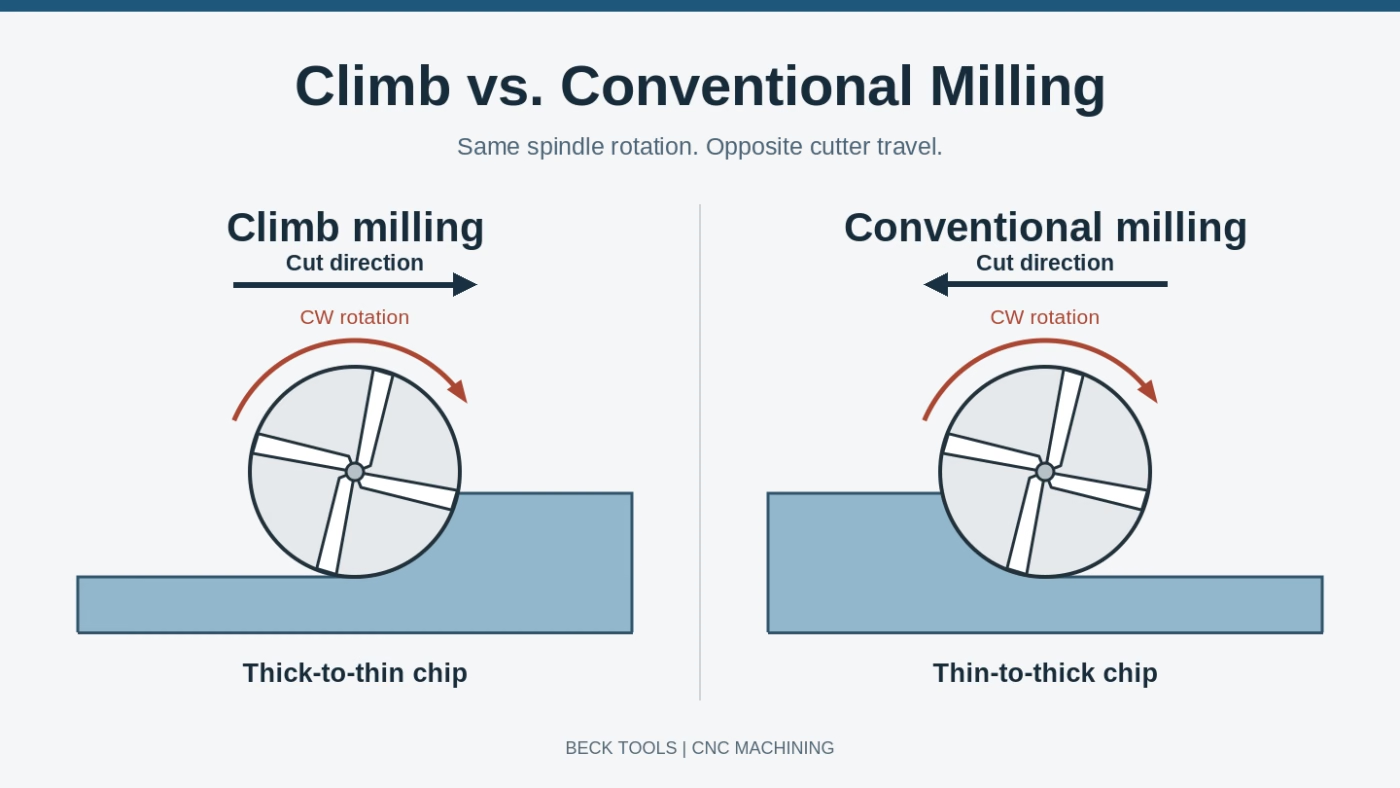
One of the first decisions you make when programming a CNC milling operation is whether to use climb milling or conventional milling. Most modern CAM software defaults to climb milling, and for good reason. However, that does not mean conventional milling is obsolete or that climb milling is automatically the correct choice for every operation. […]
Tag Archives: CNC Milling
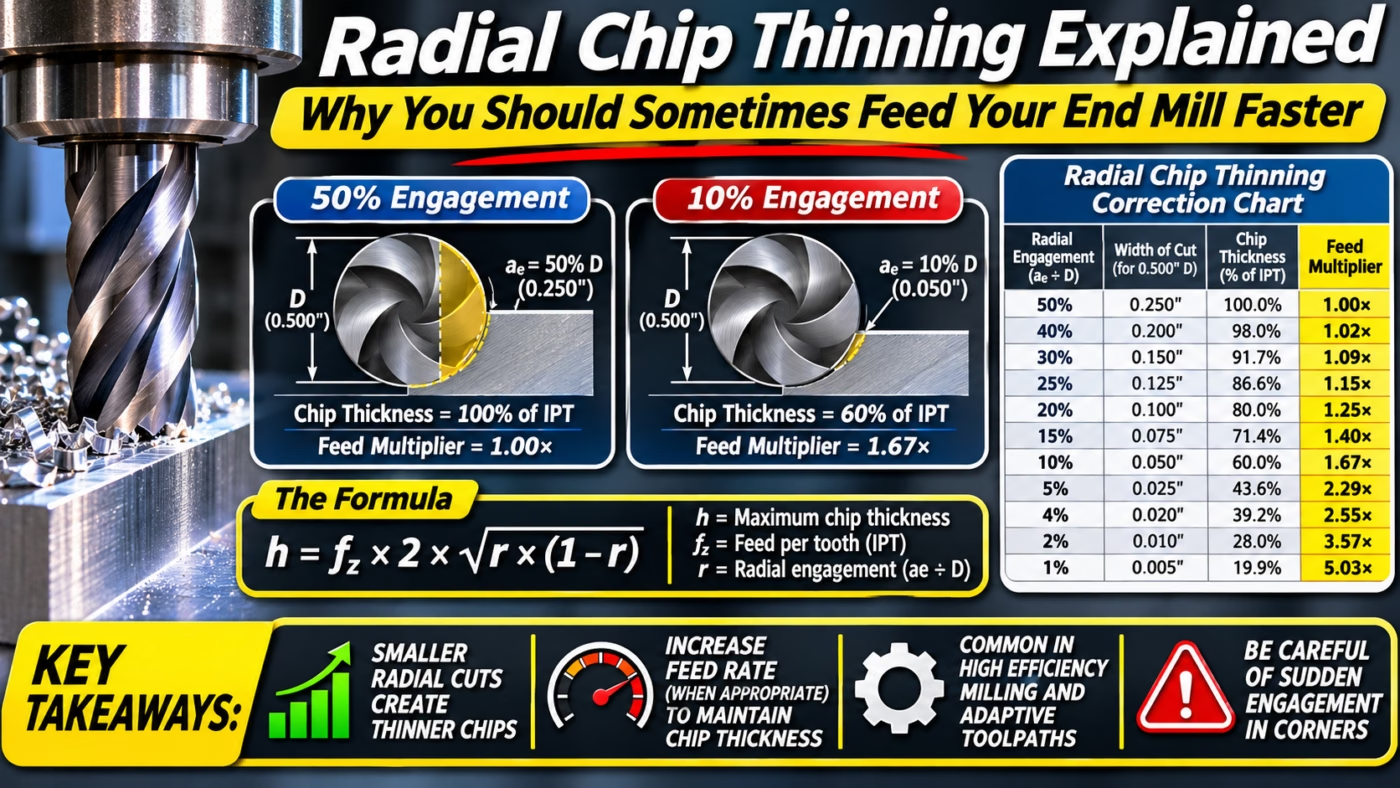
One of the more counterintuitive aspects of CNC machining is that reducing the width of cut can actually require increasing the feed rate. To someone unfamiliar with radial chip thinning, that might sound completely backwards. You are removing less material with each pass, so why would you want to feed the cutter faster? The answer […]
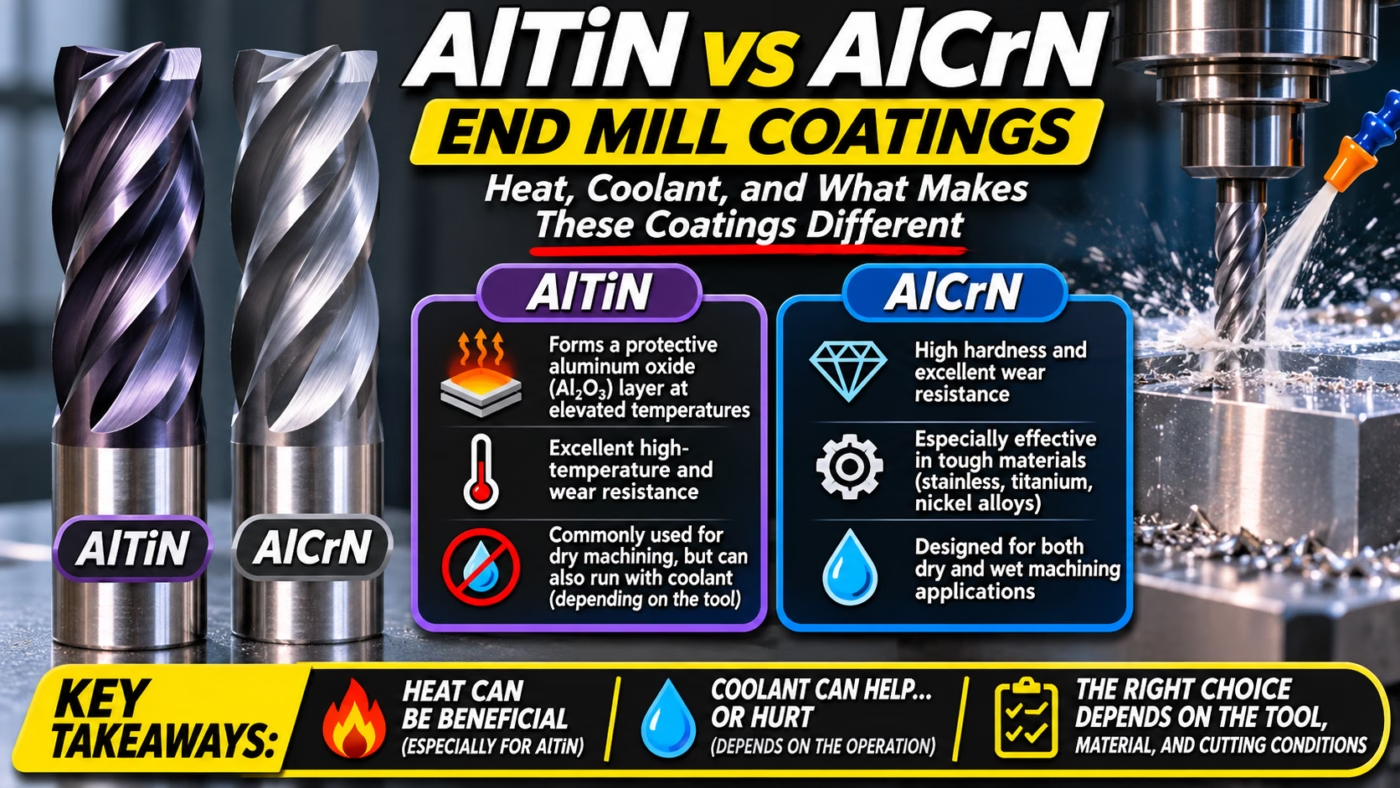
AlTiN vs AlCrN End Mills: Heat, Coolant, and What Makes These Coatings Different One of the most misunderstood aspects of carbide end mill coatings is how they interact with heat. Most people assume that heat is always bad for a cutting tool and that adding coolant will automatically extend tool life. That is not necessarily […]
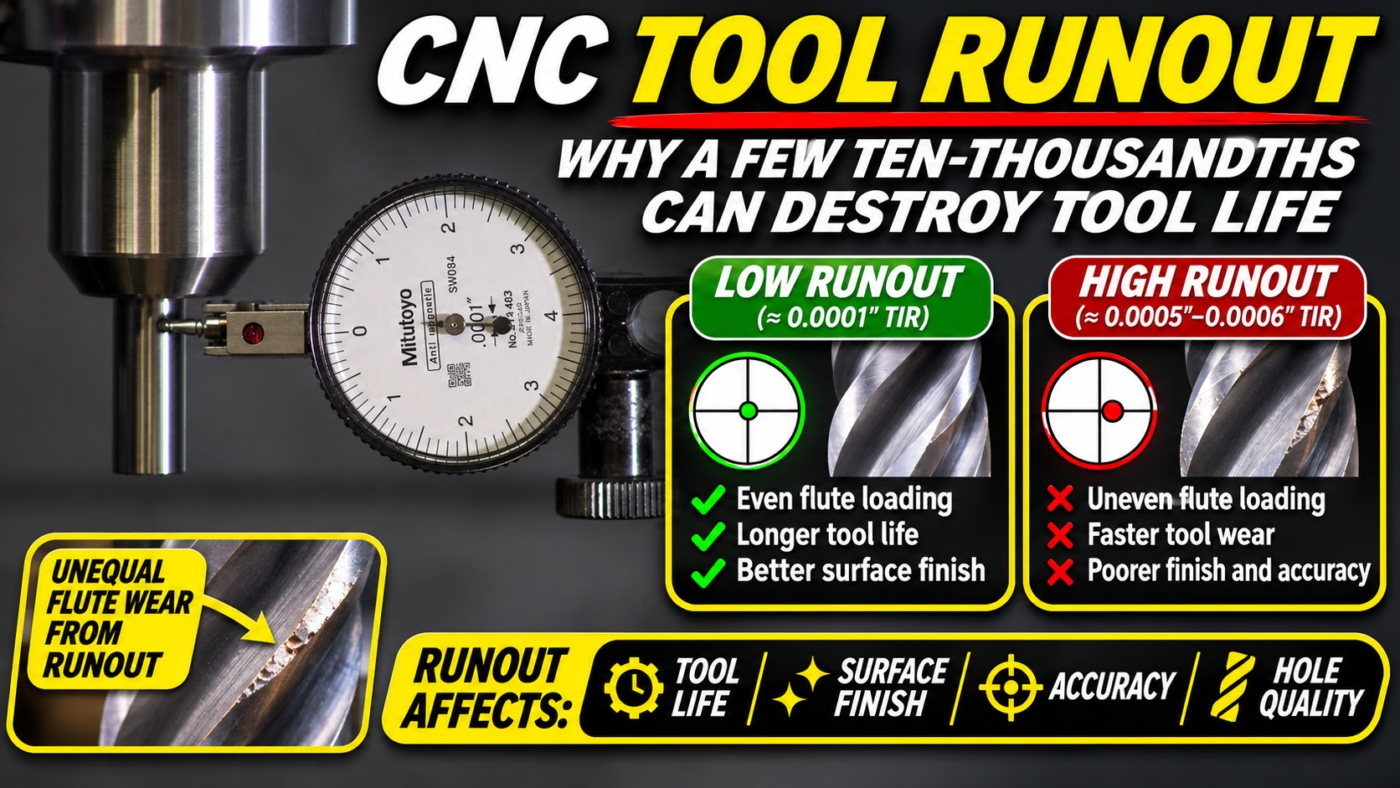
CNC Tool Runout: Why a Few Ten-Thousandths Can Destroy Tool Life You can buy a premium carbide end mill, use the manufacturer’s recommended feeds and speeds, and still get terrible tool life. The cutter may not be the problem. The problem could be tool runout. Runout causes the cutting tool to rotate slightly off center. […]
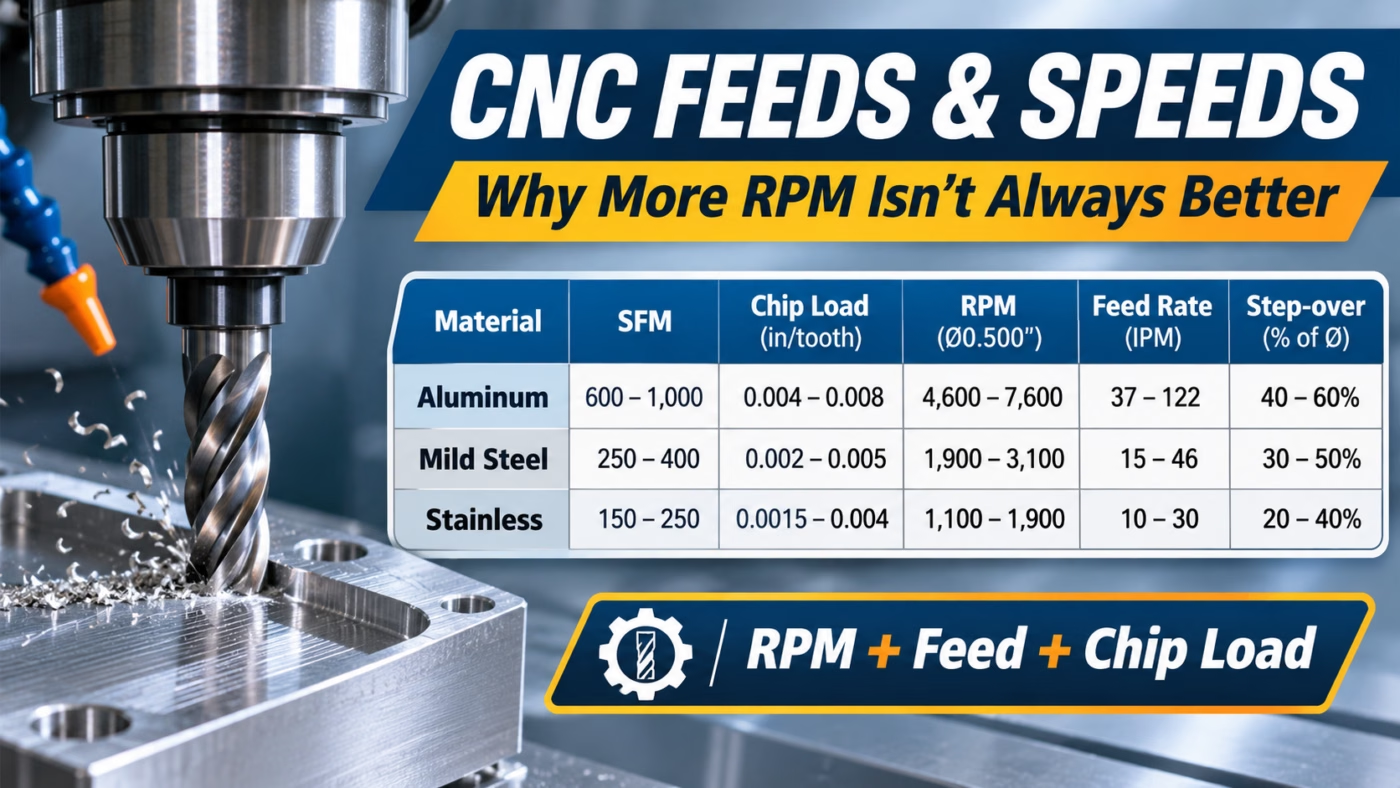
CNC Feeds and Speeds: Why More RPM Isn’t Always Better Feeds and speeds are probably responsible for more bad CNC advice than almost any other machining topic. You will hear things like: “Turn the RPM up until it sounds good.” “Slow the feed down if the cutter is struggling.” “More RPM gives you a better […]
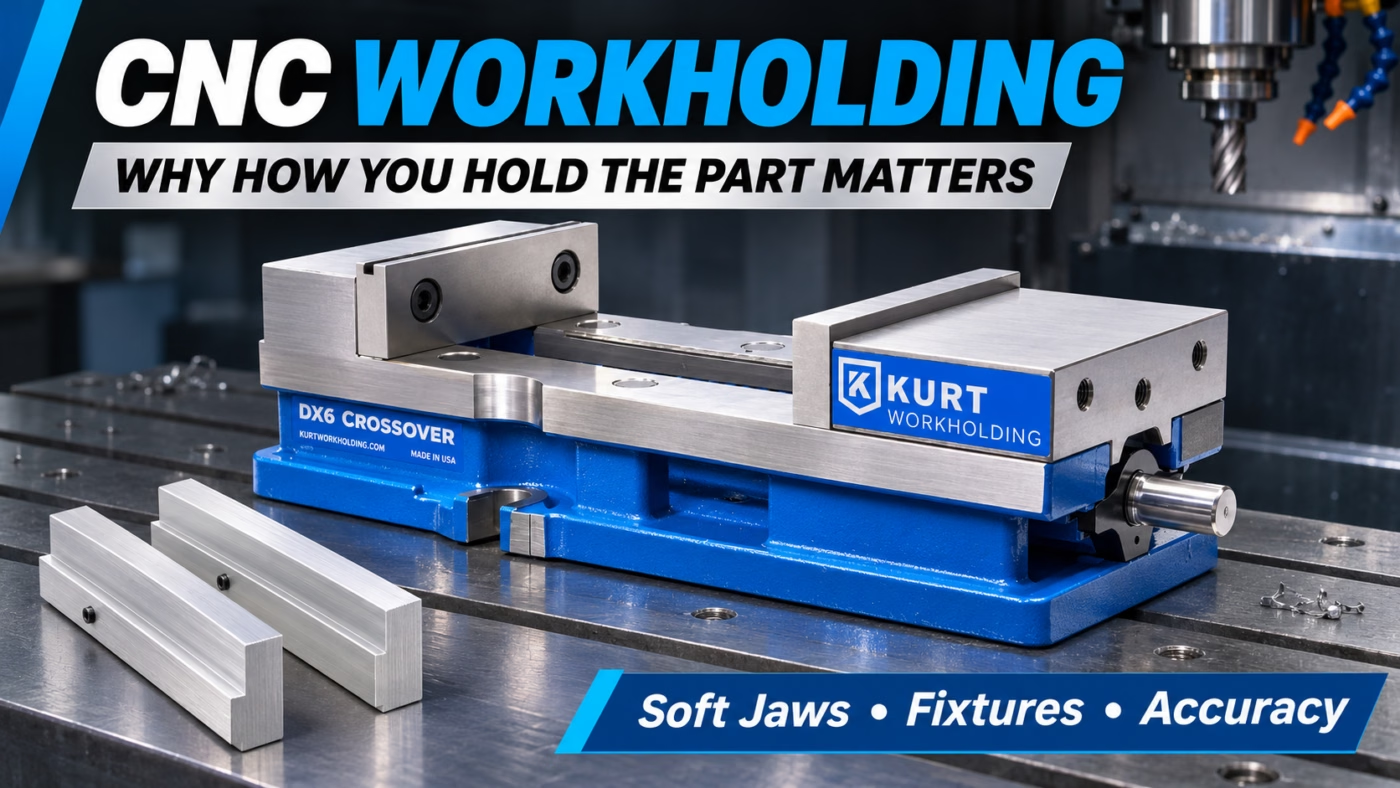
CNC Workholding: Why How You Hold the Part Matters as Much as the Toolpath A CNC program can be perfect. The feeds and speeds can be correct. The cutter can be brand new. And the part can still come out wrong because of one basic problem: It was not held correctly. Workholding is one of […]
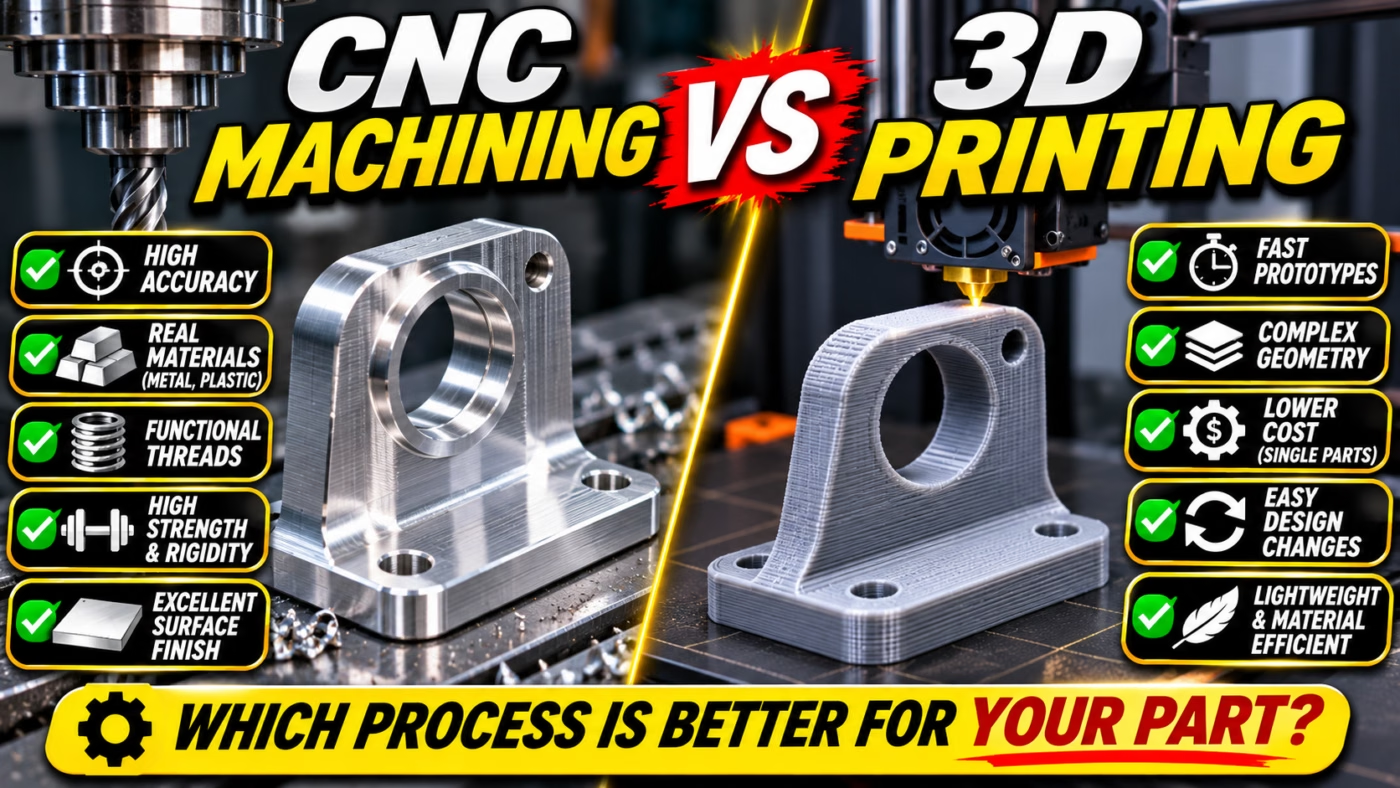
CNC Machining vs 3D Printing: Which Process Is Better for Your Part? CNC machining and 3D printing are both excellent ways to turn a CAD model into a real part. They just solve very different problems. I see people compare them as though one technology is replacing the other, but that misses the point. A […]
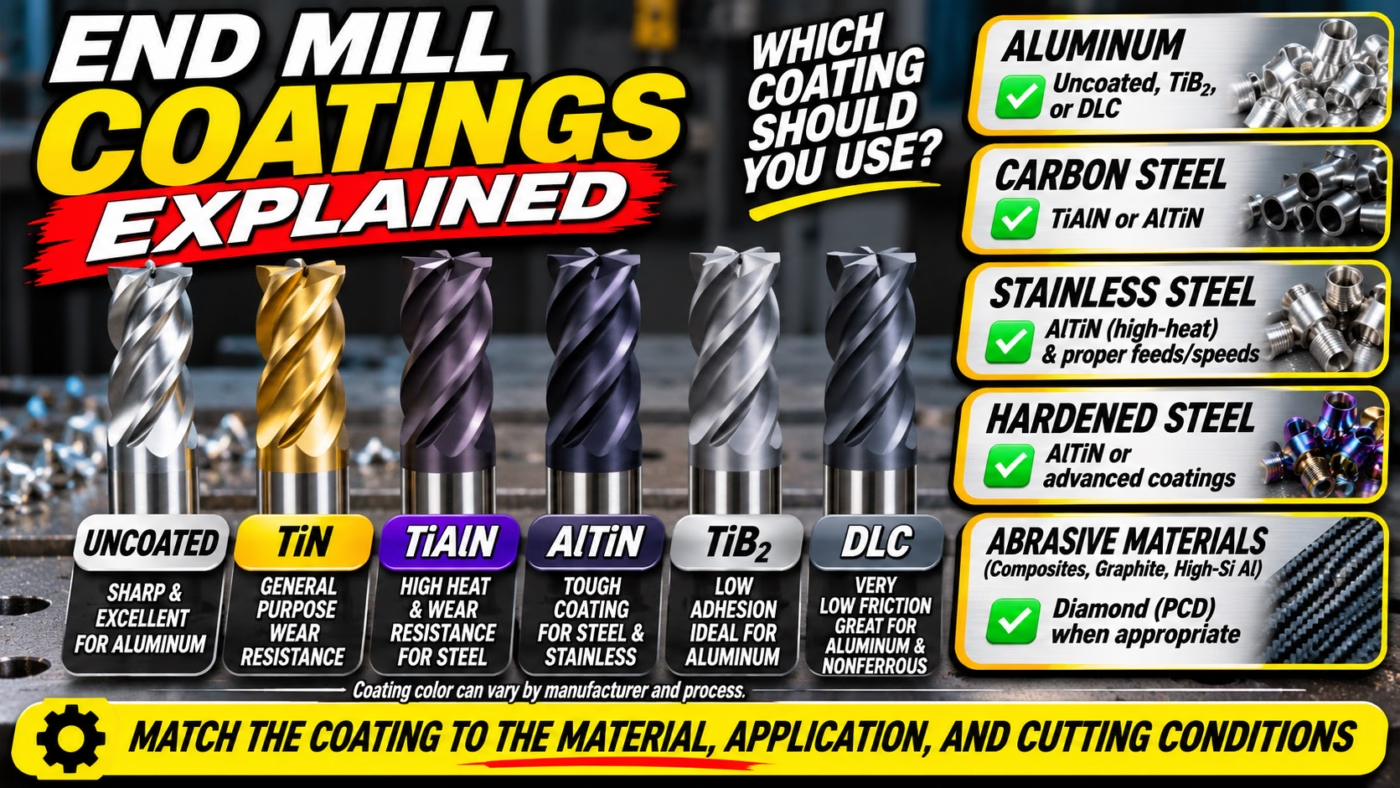
End Mill Coatings Explained: Which Coating Should You Use? Walk through any cutting-tool catalog and you will find end mills offered with a long list of coatings. TiN. TiAlN. AlTiN. TiB2. DLC. And sometimes the best choice is no coating at all. It is easy to assume the most expensive or technologically advanced coating must […]
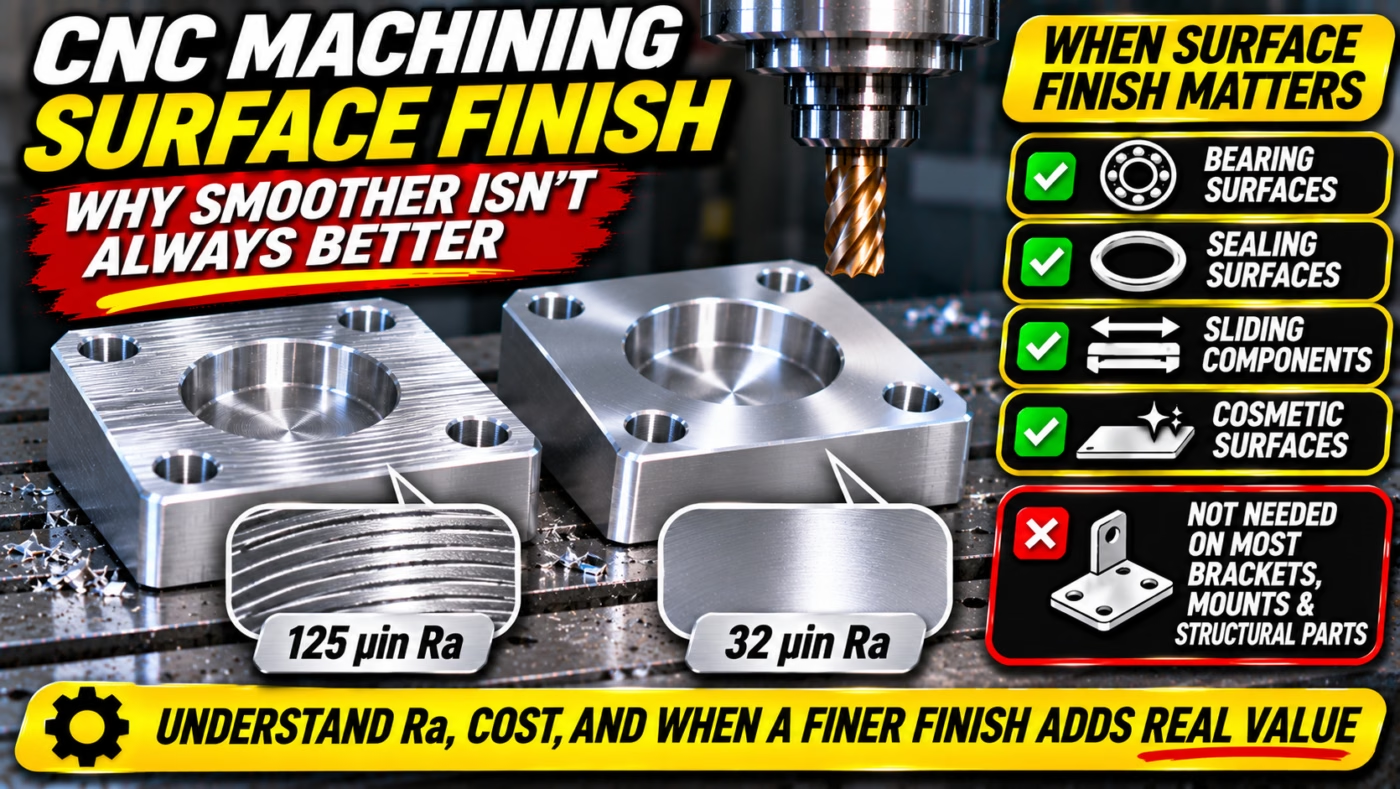
CNC Machining Surface Finish: Why Smoother Isn’t Always Better Surface finish is another area where CNC machined parts can get more expensive without becoming any better at their actual job. A drawing might call for a very smooth machined finish because it sounds like higher quality. But just like tolerances, a smoother surface is only […]
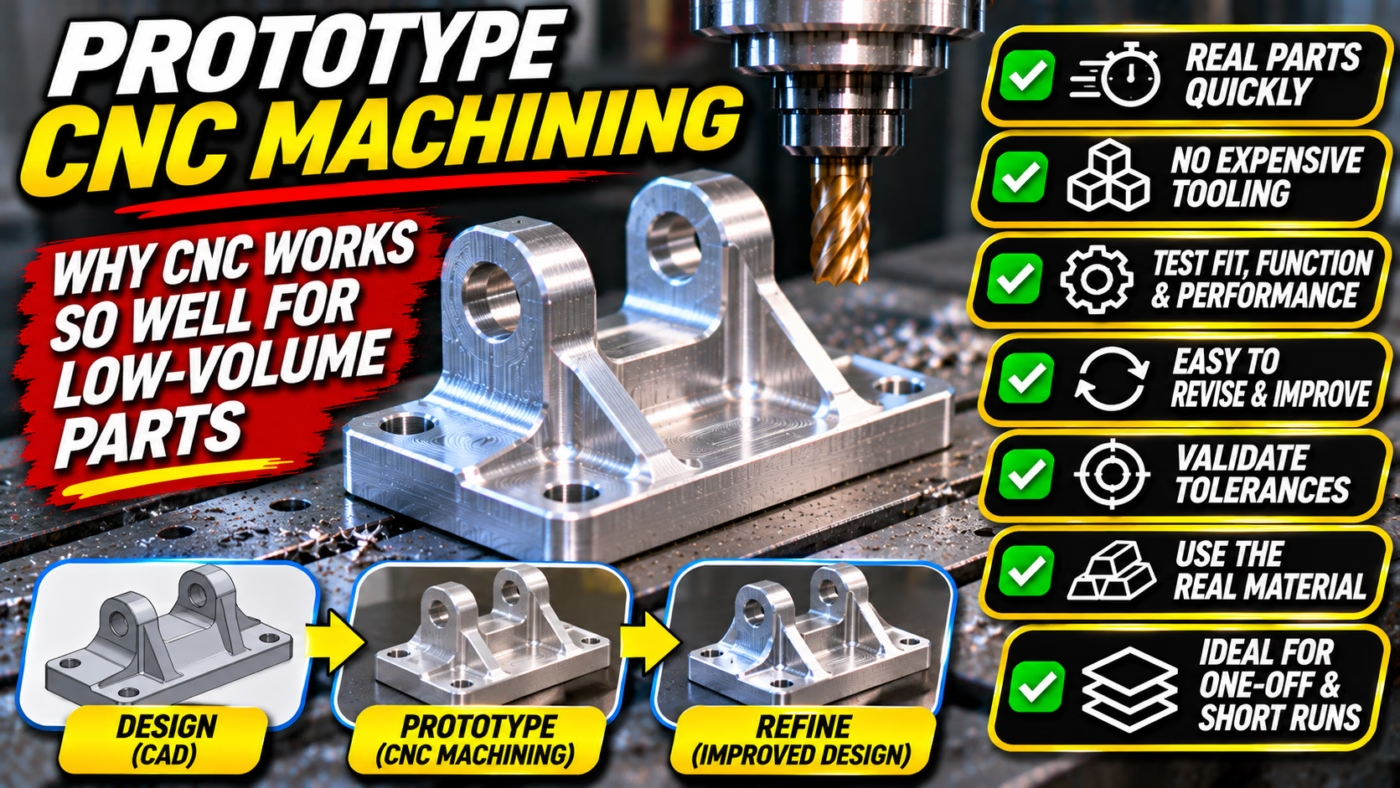
Prototype CNC Machining: Why CNC Works So Well for Low-Volume Parts One of the biggest advantages of CNC machining is that you do not need to build expensive dedicated tooling before making the first part. That makes prototype CNC machining especially useful when you need one part, a handful of parts, or a design that […]
- 1
- 2